KeyKnox for Premise & Workplace
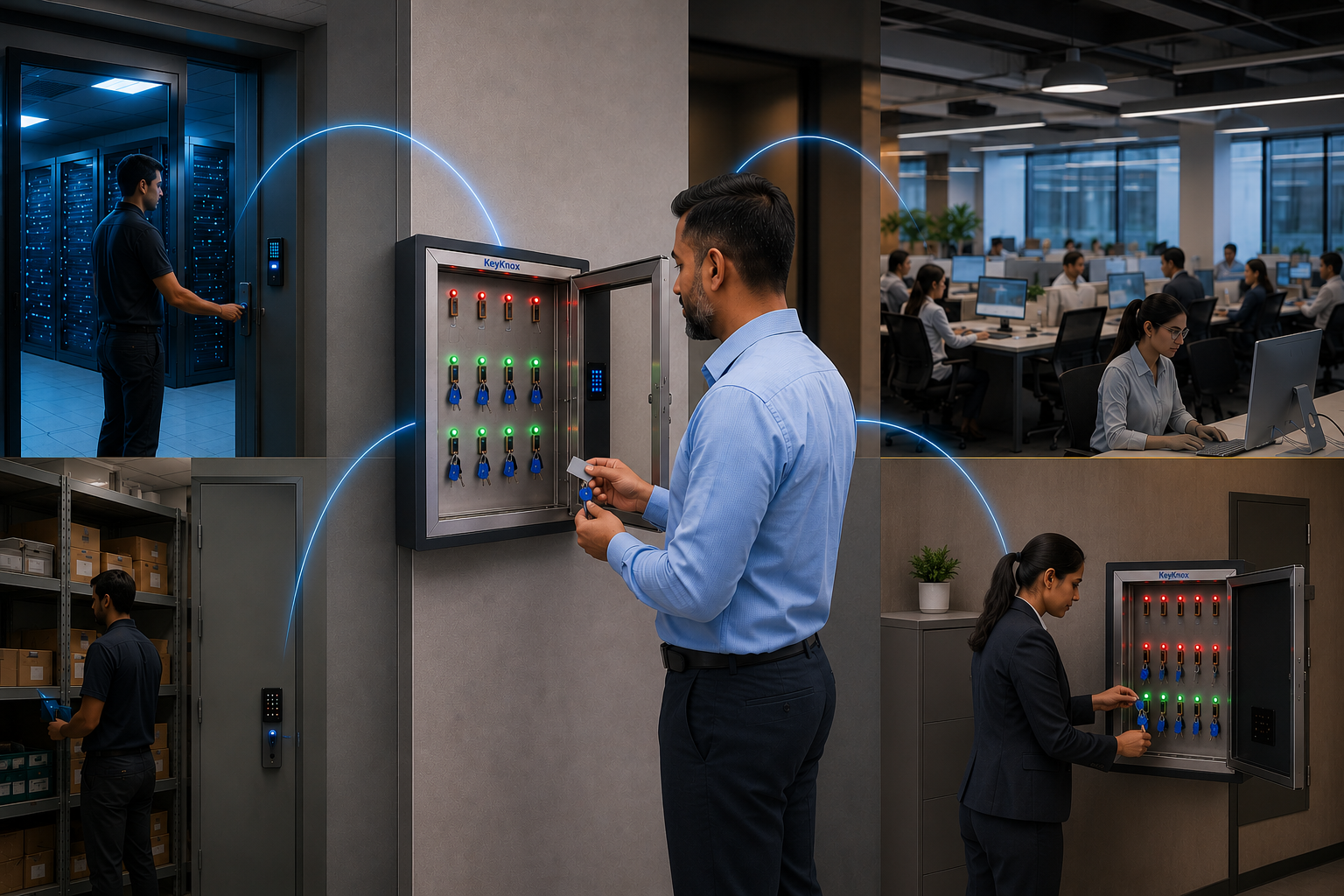
From key issuance to exit, every transaction is authenticated, time-bound, and logged — closing the physical key security gap that digital access control never reached.
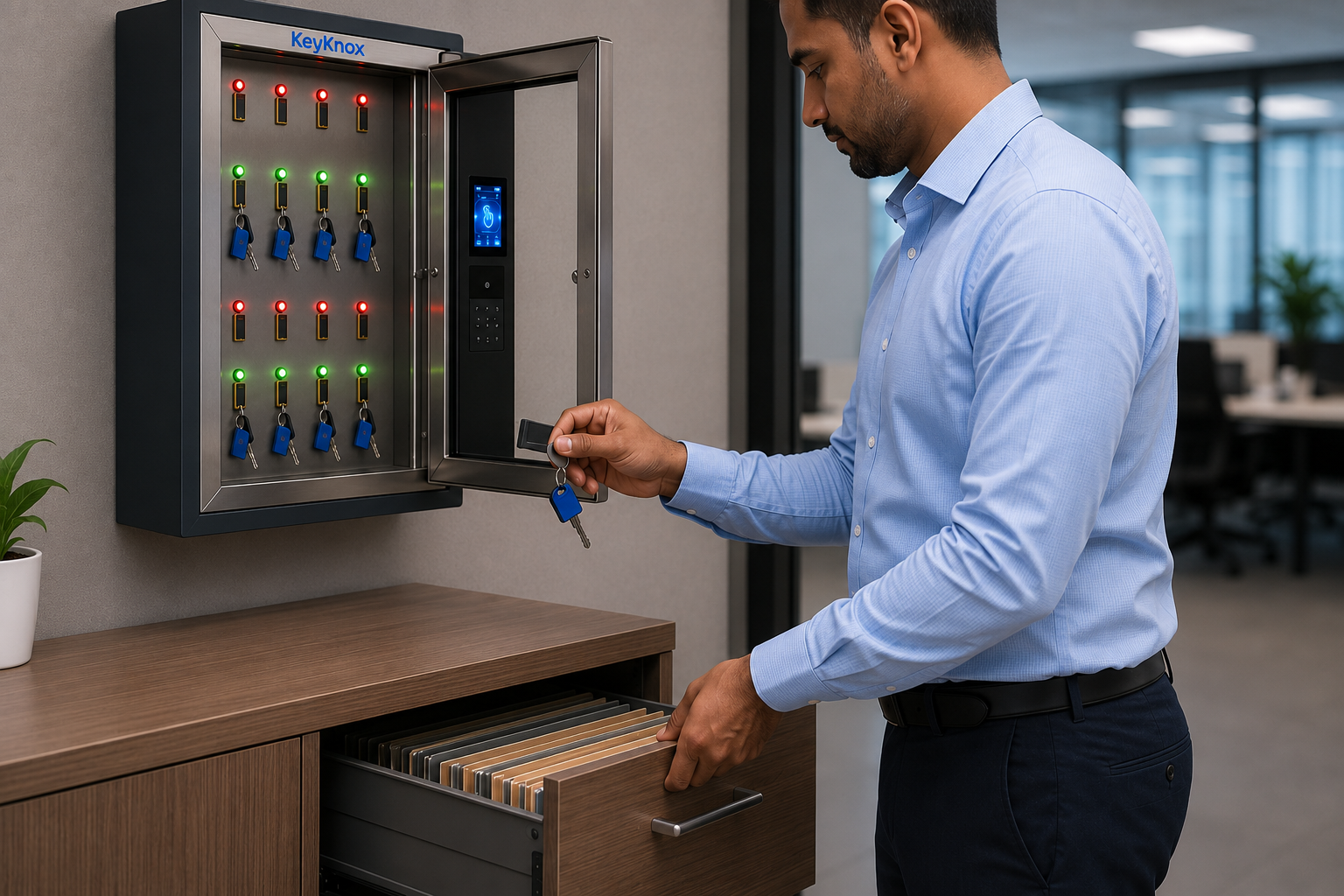
Every hour facility teams spend tracking down keys, reissuing lost ones, or reconciling manual registers is an hour — and a cost — that shouldn't exist. Untracked keys don't just create security risk; they translate directly into rekeying expenses, delayed onboarding, compliance exposure, and hours of administrative overhead every week, across every office, floor, and campus.
KeyKnox eliminates these costs at the source. RFID card / Finger Biometrics/Mobile app authentication and real-time audit trails replace manual registers, cutting administrative hours and rekeying expenses while closing the accountability gap that leads to costly access incidents. Facility teams reclaim hours weekly. Compliance teams get audit-ready records instantly, not after days of reconciliation. And leadership gains a security layer that scales with the organization — without a proportional rise in cost or risk.
This is true whether you're a 50-person startup in a co-working space or a 5,000-person corporate campus. Digital access control has already evolved through encrypted credentials, biometric authentication, and centralized monitoring. KeyKnox brings physical key management up to the same standard — turning an overlooked cost center into a measurable efficiency gain.
Six steps from key inventory setup to a complete audit trail for workplace key management.
Every key in the office is tagged, labelled, and assigned a position in the KeyKnox cabinet. Access permissions are configured per key - who can access it, when, and under what conditions. Once set up, the system reduces the need for manual tracking and improves ongoing control.
When a staff member, contractor, or visitor needs a key, they authenticate at the KeyKnox cabinet via RFID card / Finger Biometrics/Mobile app. The system releases only the keys that are authorised to access. Every access event is recorded with user identity and timestamp.
Keys issued to contractors, vendors, or temporary staff are governed by time-limited permissions. Access is controlled based on predefined rules, reducing the likelihood of keys remaining in circulation beyond their intended use.
If a key is not returned within the defined timeframe, system alerts and notifies via SMS, email, or system alert to support timely return and improve accountability
When user access requirements change, permissions can be updated or revoked as part of administrative workflows either manually or automatically via HRMS integration. Outstanding key usage can be identified and addressed as part of exit or role-change processes.
Every key transaction - including issuance, return, and access events - is recorded and available for reporting. Access history can be reviewed for specific keys, users, or time periods to support audits and operational analysis.
Hardware, software & mobile platform for the complete key management ecosystem
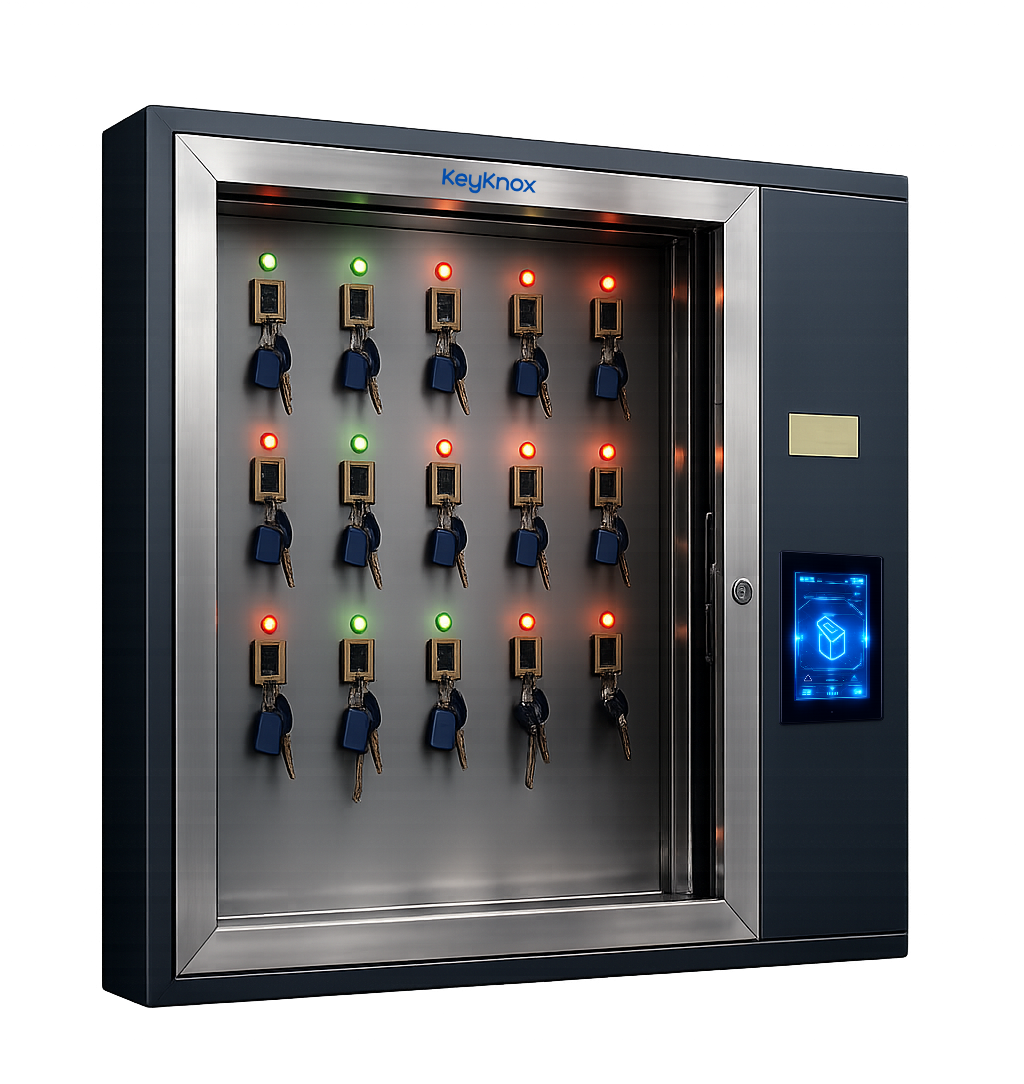
The KeyKnox cabinet is designed for secure storage and controlled access to keys, ensuring traceability and accountability across operations.
2.4-inch TFT display
60,000 events
30,000
TCP/IP, RS485
Mifare Smart Card, HID Multi-technology Card
Available in 16, 32, 64, 96 and 128 keys.
Up to 128 keys per system
Powder-coated mild steel (1 mm)
Polycarbonate / Tuffon Glass door with metal frame.
Electric Motorized Lock
Wall-mounted system
Available on request
Available on request
110V – 240V AC
12 V DC
12V @ 2 Amp

KeyKnox Shield is the centralised software platform used to configure, manage, and monitor key access, cabinet operations, and audit records across multiple locations.
Each transaction is recorded with user identity, timestamp, and action performed.
The system maintains structured logs including:
These records support internal audits, compliance requirements, and incident analysis.
The KeyKnox Shield Mobile App provides a mobile interface for users to access key information and interact with the system as per configured permissions.
Answers about KeyKnox — secure storage, access control, and audit-ready key tracking.
An Electronic Key Management System is a secure solution that helps organizations control, monitor, and track the usage of physical keys. By combining intelligent key storage hardware with centralized management software, the system improves accountability, enhances security, and reduces the risk of lost or unauthorized key access.
Keys are stored within a secured electronic cabinet and assigned to authorized users. Users can access only those keys for which they have been granted permission. Every key transaction is recorded, providing complete visibility into key usage, returns, and access history.
An Electronic Key Management System helps improve security, reduce manual record-keeping, and strengthen accountability. Organizations can monitor key movements, control user access, track overdue keys, and maintain a clear audit trail of all key-related activities.
Access to keys is controlled through user permissions configured by authorized administrators. Depending on organizational requirements, users may be granted access to specific keys, groups of keys, or designated locations.
Yes. The system maintains a record of key transactions, allowing administrators to identify which user accessed a particular key, when it was removed, and when it was returned.
Yes. Administrators can configure access permissions based on organizational requirements. Users can be assigned specific keys or key groups, helping ensure that only authorized personnel have access to designated assets.
Administrators can monitor outstanding key transactions through the management platform. The system helps identify overdue keys and provides visibility into who currently has possession of the key.
Yes. The system provides a centralized management platform that enables administrators to manage users, permissions, key assignments, reports, and operational activities across the organization from a single interface.
Yes. The system maintains activity records related to key usage, user actions, assignments, transfers, and other operational events. These records support internal audits, compliance requirements, and operational monitoring.
Yes. The platform can be used to manage key access operations across multiple locations, helping organizations maintain centralized visibility and control while supporting local operational requirements.
Electronic Key Management Systems are commonly used in corporate offices, manufacturing facilities, logistics operations, educational institutions, healthcare facilities, government organizations, transportation environments, utilities, and other locations that require controlled access to physical keys.
KeyKnox addresses this gap - for workplaces of every size and type.
Book Consultation