Visitor management systems have evolved considerably over the last decade — digital check-ins, ID scanning, photo capture, host notifications. Yet one physical gap persists at nearly every reception desk: what happens to a visitor's belongings, devices, or restricted items once they walk past the front desk? In high-security environments, this unmanaged handoff is often the weakest link in an otherwise sophisticated access control strategy.
The Front Desk Blind Spot
Most visitor management protocols end at identity verification and badge issuance. Few extend to physical item control — laptops, cameras, storage devices, or personal belongings that visitors may need to store before entering restricted areas like data halls, R&D labs, or manufacturing shopfloors. Without a secure, monitored storage mechanism, organizations rely on informal solutions: a shelf behind reception, an unlocked cabinet, or simply trusting that policy will be followed.
For sectors like BFSI, government and PSU facilities, and IT parks with sensitive intellectual property, this is a material security and compliance exposure — one that undermines the very access control discipline the rest of the facility maintains.
Smart Lockers as a Visitor Access Control Extension
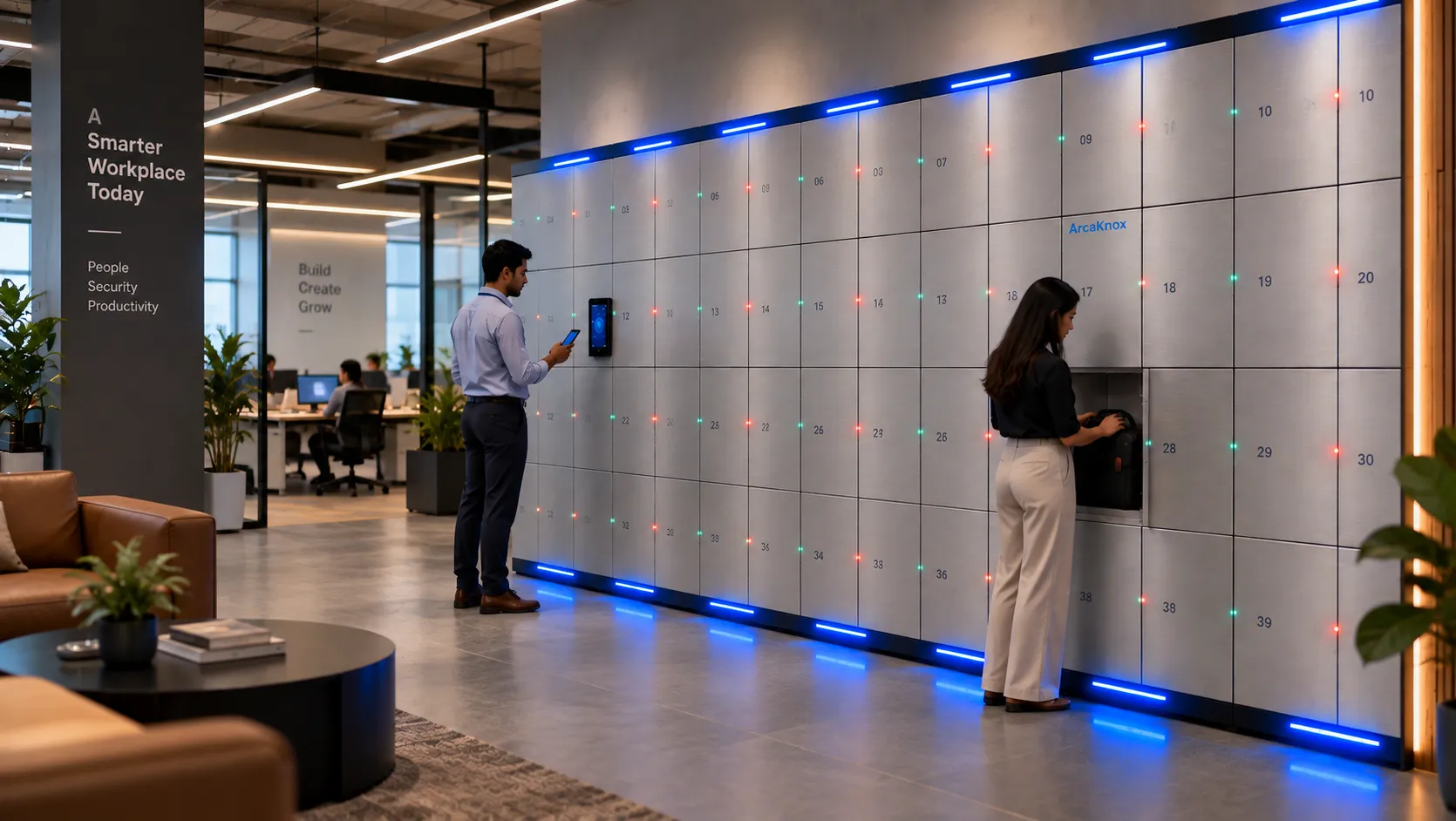
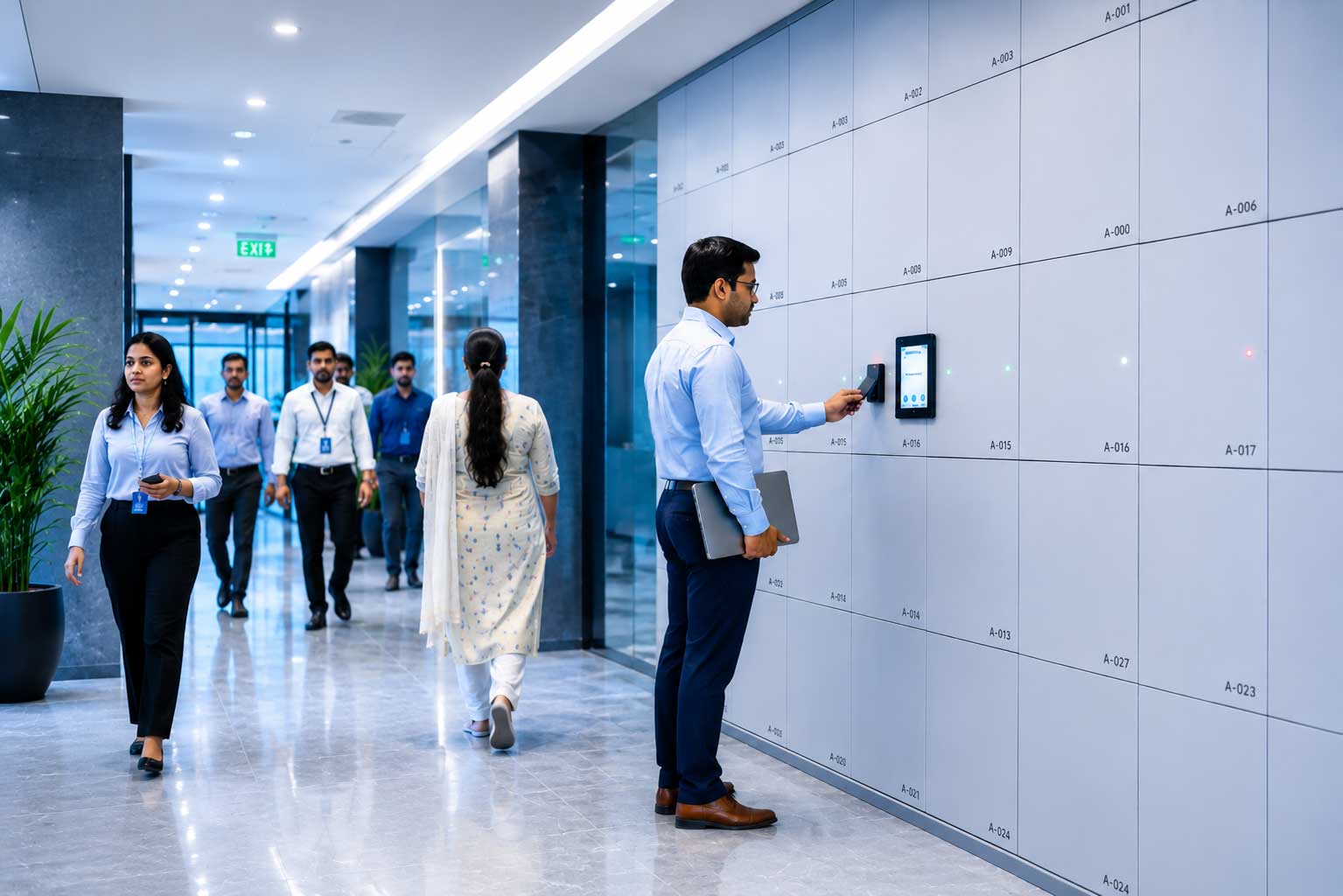
Integrating access-controlled smart lockers into the visitor management workflow closes this gap. Rather than treating visitor item storage as an afterthought, a smart locker system ties item storage directly to the visitor's verified identity — the same credential used for check-in governs locker access, creating a single, continuous chain of accountability from arrival to departure.
What This Looks Like in Practice
- Credential-linked locker assignment, where a visitor's badge or QR code unlocks a designated compartment
- Real-time monitoring of every locker interaction, tied to the visitor log for a complete audit trail
- Automated compartment release upon checkout, eliminating manual key handovers at the desk
- Host and security notifications for extended storage durations or unusual access attempts
- Seamless integration with existing visitor management and reception workflows
Why This Matters for High-Security Sectors
For banking and finance institutions, government facilities, and technology campuses handling proprietary R&D, visitor management isn't just about hospitality — it's a regulatory and security obligation. Auditors and compliance frameworks increasingly expect organizations to demonstrate not just who entered a facility, but what they carried, stored, and retrieved during their visit. A smart locker layer integrated into visitor management provides exactly this level of traceability, without adding friction to the visitor experience.
Operational Benefits Beyond Compliance
Beyond audit readiness, this approach reduces the burden on reception and security staff, who no longer need to manually manage physical key handovers or monitor unsecured storage areas. It also improves the visitor experience — a self-service, credential-based locker interaction feels far more professional than handing belongings to a receptionist and hoping for the best.
Closing the Loop on Facility Access Control
Access control is only as strong as its weakest touchpoint. Organizations that have invested heavily in digital visitor management, badge systems, and perimeter security often overlook the physical storage gap at reception — precisely because it seems like a minor logistical detail rather than a security control point. Closing this gap with monitored, credential-linked smart lockers extends the same rigor applied to facility entry all the way through to visitor item handling.
Meclix's ArcaKnox extends enterprise-grade access control and real-time monitoring to visitor asset management, integrating seamlessly into front-desk and reception workflows across corporate offices, government facilities, and technology campuses.